Miksi AAC-erityispedagogiikka©?Varför AKK-specialpedagogik©?Why AAC Special Education©?Warum UK Sonderpädagogik©?Pourquoi CAA éducation specialisée©?
Puhumattomat, kehitysvammaiset autistit voisivat oppia niin paljon – jos me soisimme heille oikeuden oppia ja kehittyä. Vallankumouksellinen, viittomiin ja kuviin perustuva menetelmä nosti erityisopetuksen tuottavuuden vuositasolla yli tuhatkertaiseksi.
Puhumattomat autistit, joiden ensimmäinen kieli on AAC, eli viittomin ja kuvin kommunikointi, eivät koko koulunkäyntiurallaan saa käyttöönsä yhtään koulukirjaa omalla kielellään. Heillä ei myöskään välttämättä ole erityisluokanopettajakoulutuksen saaneita opettajia. Opetus tapahtuu lipuin ja lapuin, mikä on hidasta ja kömpelöä ja mikä helposti sementoi lapset varhaiselle osaamistasolle. Kohderyhmä hallitsee tietotekniikan käytön usein hyvin, mutta se ei saa laitteita käyttöönsä. Kun lapsella on vaikeuksia napittaa nappeja ja/tai kääntää sivuja, muut taidot vähätellään ja tarpeet ohitetaan. Tarjolla on hyviä ’appseja’ Ipadille ja ohjelmia tietokoneille, mutta lapset putoavat kunnallisessa byrokratiassa kahden tuolin väliin. Lopputuloksena ei ole kaksi laitetta, yksi kommunikointiin ja toinen opetukseen – ei myöskään yksi yhteinen laite. Vaikka nämä lapset tulevat loppuelämänsä kommunikoimaan kirjaimin tai kuvin ja puhesynteesein, jäävät he laitteita vaille. Heidän puheoikeutensa viedään.
Viittomien ja symbolien lisääminen tietokoneohjelma Lexiaan, jota normaalisti käytetään esimerkiksi luku- ja kirjoitusvaikeuksien yhteydessä, avasi silmieni edessä ovet erityisopetuksen vallankumoukseen.
Erityisopetuksen tuottavuus yli tuhatkertaistui (ei %) vuositasolla lukutaidon, kielitietoisuuden, yleissivistyksen ja matematiikan osalta. Uuden kielen oppiminen on poikkeuksellisen myönteinen tulos, jota voisimme maahanmuuttajien kotouttamisessa hyödyntää. Oppimistulokset ovat hyvin rohkaisevia.
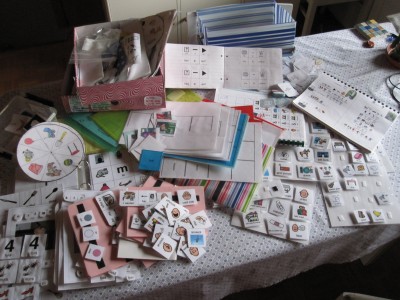
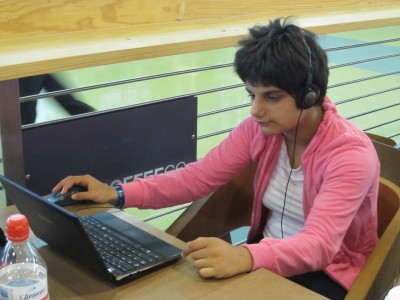
Käsityötä irrallisin kortein ja varastointiongelmin vai viittomat ja kuvat Lexiaan + kuulokkeet, selkeät äänet, työrauha ja vaihtelu?
Kuukausittainen annos muodostuu tunnin työskentelystä päivittäin koneella, jolloin oppilas rauhassa käy läpi 15-16 harjoitusta, joissa on 2-8 vaihetta ja 10-40 toistoa. Uusia teemoja ja variaatioita tulee lukukauden aikana mukaan oppisuunnitelman ja vuosikalenterin pohjalta. Myös vaatimustaso nousee oppimisen edetessä. Tämä johtaa 40-250 –kertaiseen tuottavuuden nousuun kuukautta kohden verrattuna manuaalisiin menetelmiin.
Tulokset ällistyttävät
Jo yhden tunnin päivittäisellä työskentelyllä olemme saavuttaneet ällistyttäviä tuloksia akateemisissa aineissa, kommunikoinnissa, vuorovaikutuksessa, kielitaidossa (vieras kieli) ja opiskelutekniikassa. Virkkeiden pituus on kasvanut. Olemme viittomien, kuvien ja äänien avulla käyneet läpi jopa Topeliuksen ja Runebergin elämää ja tuotantoa, maailman uskontoja, maan kaksikielisyyttä, vammaisasiaa sekä maailman kieliä. Viittomien käyttö on lisääntynyt huikeasti.
Lukuvuoden aikana yli 600 suomen kielen sanaa on menestyksellä opittu – kuullun ja symbolien perusteella! Kyse on toisen kotimaisen kielen opinnoista eräänlaisena ’kielisprinklerinä’ (kielisuihkua vähäisempi altistus). Tähän oppimistulokseen kykenee yksikielinen (ummikko), viittomin ja kuvin kommunikoiva, puhe-, luku- ja kirjoitustaidoton, kehitysvammainen autisti.
Lukuvuoden alussa numeroalue 1-5 aiheutti suurta empimistä. Nyt 1-10, joskus 1-12, sujuvat hienosti. Tämän lisäksi kymmenluvut ja määriä osoittavat pikkusanamme sujuvat, viittomineen. Tehtävässä Järjestä kirjaimet (sanoiksi) mallin näyttöajan lyhentäminen helmikuisesta 4 sekunnista, 2 ja 1 sekunnin kautta toukokuun 0,5 sekuntiin, on mennyt huomaamatta. Tehtävässä rakennetaan 2-3 kirjaimen sanoja tietyssä järjestyksessä. Neljässä kuukaudessa, 5 minuutissa kirjoitettujen sanojen määrä on noussut noin 15-20 sanasta 25-30 sanaan (päiväkunnosta riippuen).
Johtopäätöksiä
Käyttämällä viittomia ja kuvatukea Lexian avulla, voimme satsata oppimiseen sanan laajimmassa merkityksessä, vieläpä kustannustehokkaalla tavalla. Samalla saattaisimme saada oppilailta/käyttäjiltä riemunkiljahduksia: vihdoin joku, joka välittää ja joka poistaa esteitä tieltäni. Ja joka antaa minulle puheoikeuden ja vallan vaikuttaa oman elämäni sisältöön.
Terry (Thérèse) Grahn
M.A., käyttäytymistieteilijä, pedagogi, MBA(Henley), esh, lobbari ja omainen
AAC:n (lo-tech, hi-tech), AAC-erityisopetuksen, viittomien ja oraalimotoriikan asiantuntija, lobbari (oikeudet, prosessit, substanssi ja osaaminen)
Twitter AAC_Terry
www.puheoikeus.fi (Right to talk, yttranderätt)
VALOKUVAT ja MENETELMÄ (AAC-erityisopetus, AAC-Lexia) ©: Terry Grahn
Viittomat ja symbolit: Lexia, Handlaget, SPSM, Widgit, BM ja Papunet
Lexia löytyy ruotsinkielisenä, suomenkielisenä ja englanniksi nimellä Lexion.Icke-talande autister med utvecklingsstörning kan lära sig så mycket – om vi tillåter det. Revolutionerande metod inom bildstödd specialpedagogik höjde produktiviteten över tusenfalt på årsnivå.
De icke-talande autisterna, vilkas förstaspråk är tecken och bildstöd, har inte en enda skolbok idag för hela skoltiden på sitt modersmål, inte nödvändigtvis (lärar- eller specialklasslärar)utbildade lärare heller. Undervisningen sker på lösa lappar, en långsam och klumpig metod som lätt cementerar barnen på en låg nivå. Inom IT är målgruppen är duktig, men trots IT-färdigheterna får eleverna ingen apparatur. Kapaciteten och behoven förbigås pga elevernas svårigheter att knäppa knappar eller vända sidor. Idag finns det bra ’appar’ för Ipad och program för PC:n, men barnen ramlar mellan två stolar i den kommunala byråkratin och får noll apparater i ställer för två, en för kommunikation och en för undervisningen – de får inte heller en gemensam apparat för dessa. Trots att dessa barn kommer att kommunicera livet ut med bokstäver eller bilder och talsyntes, blir de utan apparater. De berövas sin yttranderätt.
Undervisningen sker på lösa lappar, en långsam och klumpig metod som lätt cementerar barnen på en låg nivå. Inom IT är målgruppen är duktig, men IT-färdigheterna och behoven förbigås då datorer delas ut pga elevernas svårigheter att knäppa knappar eller vända sidor. Idag finns det bra ’appar’ för Ipad och program för PC:n, men barnen ramlar mellan två stolar i kommunen och får noll apparater i ställer för en eller två, trots att deras kommunikation livet ut sker med bokstäver eller bilder och talsyntes.
Med tecken och symboler i Lexia, ett datorprogram vid bla läs- och skrivsvårigheter, öppnades dörren till en specialpedagogisk revolution för mina ögon.
Produktiviteten i specialundervisningen ökade mer än tusenfalt (inte %) på årsbasis inom teman som läskunnighet, språkmedvetenhet, allmänbildning och matematik. Exeptionellt är att man också lär sig språk, vilket kunde användas inom språkundervisningen för invandrare. Inlärningsresultaten är mycket sporrande.
Manuellt med lösa kort och stora lagringssvårigheter eller Tecken och bilder på Lexia – hörlurar, tydliga ljud, arbetsro, variation?
Den månatliga ransonen är en timme jobb vid datorn per dag, varvid eleven i lugn och ro går igenom 15-16 övningar med 2-8 delmoment och 10-40 upprepningar. Nya teman och variationer tillkommer under terminens gång i enlighet med läroplanen och årskalendern. Kravnivån stiger i takt med inlärningen. Det ger en 40-250 –faldig produktivitetsökning per månad jämfört med manuella metoder.
Resultaten är häpnadsväckande
Med redan en timme om dagen har häpnadsväckande resultat nåtts i akademika, kommunkation, interaktion, språk (rfämmande språk) och studieteknik. Satslängden har ökat. Vi har med bild-, tecken- och ljudstöd gått igenom t o m Topelius’ och Runebergs yrkesliv och produktioner, världsreligionerna, landets tvåspråkighet, handikappfrågor och världsspråken. Teckenbruket har ökat drastiskt.
Över 600 finska ord har enkelt lärts in under skolåret – via hörselminnet och symboler! Det gäller det andra inhemska språket i form ett slags ’språksprinkler’ (med mindre utsättning än en språkdusch). Inlärningsresultatet är man som enspråkig, tecken- och bildkommunicerande, taloförmögen, läs- och skrivokunnig, utvecklingsstörd autist kapabel till.
Från stor tveksamhet inom sifferområdet 1-5 i augusti, går 1-10, ibland 1-12 i maj galant, kryddat med hela tiotal och våra mängdangivande småord jämte tecken. I Ordna bokstäver (till ord) märker man inte att förhandsvisningen av orden i februari var 4 sekunder, sedan 2, 1 och i maj 0,5 sekunder. I uppgiften byggs 2-3 –boksavsord i en viss ordningsföljd. På fyra månader har antalet ord som avverkas unedr den givna femminutersperioden ökat från 15-20 till 25-30 (lite beroende på dagsformen).
Konklusioner
Med tecken och bildstöd i Lexia kunde vi satsa på inlärning i ordets vidaste bemärkelse, på ett kostnadseffektivt sätt. Samtidigt kunde vi bemötas av jubel från eleverna/brukarna: äntligen någon som bryr sig och som tar bort hindren på min väg. Och som ger mig yttrenderätt och makt över mitt eget liv.
Terry (Thérèse) Grahn
M.A., beteendevetare, pedagog, MBA(Henley), spec sk, lobbare och anhörig,
utbildad i AAC/TAKK och oralmotorik, lobbare i substans och process
Twitter AAC_Terry
www.puheoikeus.fi (Right to talk, yttranderätt)
FOTON: Terry Grahn
Bilder från Lexia med tillstånd av Olle Gunnilstam, tecken med tillstånd av Hannele Rabb (Handlaget) och Specialpedagogiska skolmyndigheten (Ritade tecken). Källa: även Boardmaker och Papunet.
Kan även formuleras: Bilder: Lexia, Handlaget, SPSM, BM och Papunet
COPYRIGHT PÅ METODEN OCH PÅ DE BIFOGADE BILDERNA: Terry Grahn
Lexia förekommer på svenska och på finska och under namnet Lexion även på engelska.Non-talking autists with cognitive disorder could learn so much – if we allowed them to. Revolutionary method within special education based on AAC increased productivity thousandfold on a yearly basis
The non-talking autists, the first language of which is AAC, alternaive and augmentative communication methods (ie. signs, symbols etc.) do not have a single school book, written in their mother tongue, during their whole basic education at school. They do not necessary have trained teachers or specials needs teachers either. The teaching mainly takes place with different sets of cards, a slow and rather clumsy method that tends to cement kids at a low level of skills. Often, the group is highly PC-literate. In spite of that, they tend not to get any PC:s or Ipads as a means of support. Their skills and needs are ignored due to the fact that they might not handle buttons or zippers very well or because turning pages causes problems. If a ‘gadget’ can be used both as a means of communication and as a tool for education, these kids become neither two nor one, but zero gadgets – as different units within the very same municipality try to get rid of the costs. Yet and still, these individuals will need ICT as they are predestined to communicate through letters or symbols and speech syntheses throughout their lives. They are deprived of their right to talk.
By putting signs and symbols into Lexion, a PC-programme used in the rehabilitation of dyslexia, aphasia etc, the door to a revolution in special education opened before my very eyes.
We managed to increase the productivity within special education more than thousandfold (not %) p.a. in ability to read, linguistic awareness, general knowledge and mathematics. A highly exceptional outcome was that a foreign language can be learned using this method. It has implications for immigrant education. The learning results are very encouraging.
Manually with loads of cards and storage problems or Signs and symbols in Lexion – headsets, clear sounds, quiet, variation?
The monthly ’dosis’ consists of one daily hour of PC-work. The pupil has plenty of time to work through 15-16 exercises, each consisting of 2-8 elements and 10-40 repetitions. New themes and variations are added during the term in accordance with the curriculum and the annual calendar. The level of difficulty of each exercise increases and the requirements rise hand in hand with progress in learning. By acting this way, we get a 40-250 –fold monthly increase in productivity compared with manual methods.
The results are astonishing
With only one hour a day, astonishing results are shown in academics, communication, interaction; linguistic skills (foreign language) ans study technique. The sentences have grown from 2-3 up to 4-8 words. Using signs, symbols and sounds, we have even discussed the lives and works of Topelius and Runeberg (the authors of our national epic), world religions, our country being bilingual, handicap issues and the languages of the world. The use of signs has increased drastically.
More than 600 Finnish words have been learned during the school year – using auditive memory and symbols! Finnish is the other national language for talking pupils – all kids learn both languages. It’s considered kind of a ‘language sprinkler’ (not as heavy as a language shower) in special education. The learning result is the one of a unilingual (registered as Swedish speaker), AAC-communicating, non-speaking, non-reading, non-writing, cognitively disabled (and from abroad adopted) autistic girl (who already once has changed her mother tongue from one linguistic group to another..
In September, there was hesitation in the use of the numbers 1 to 5. Today, in May, 1 to 10 go fluently, 1-12, too. In parallel, there is a use of 20, 30 etc as well as words and signs expressing amounts and sizes. In ‘Build words from letters’ the time of the model word being shown could be decreased from 4 seconds in February, via 2 and 1 seconds to 0.5 seconds in May without anyone noticing the difference . Words consisting of 2-3 letters are built in a certain order from a list, during 5 minutes of time. In four months, there has been an increase in the number of words being written, from 15-20 to 25-30 (depending on the mood
Conclusions
Using signs and symbols in Lexon, we could achieve learning, in the widest meaning of the word, in a very cost efficient way. At the same time, we might be received with sexpressions of joy from the part of the pupils/users: at last someone who cares and who removes the obstacles from my path. And who gives me a right to talk and power over my own life.
Terry (Thérèse) Grahn
M.A., behavioural scientist, educationist/pedagogue, MBA(Henley), R.N. (spec.), lobbyist and care giverare, specialist in AAC (lo-tech, hi-tech), AAC special education, signs (Finnish, Fenno-Swedish), oral motor skills and lobbying (rights, processes, substance and competence)
Twitter AAC_Terry
www.puheoikeus.fi (Right to talk, yttranderätt)
FPHOTOS and METHODOLOGY (AAC special education, AAC-Lexia(Lexion) ©: Terry Grahn
signs and symbols: Lexia, Handlaget, SPSM, Widgit, BM and PapunetNon-talking autists with cognitive disorder could learn so much – if we allowed them to. Revolutionary method within special education based on AAC increased productivity thousandfold on a yearly basis
The non-talking autists, the first language of which is AAC, alternaive and augmentative communication methods (ie. signs, symbols etc.) do not have a single school book, written in their mother tongue, during their whole basic education at school. They do not necessary have trained teachers or specials needs teachers either. The teaching mainly takes place with different sets of cards, a slow and rather clumsy method that tends to cement kids at a low level of skills. Often, the group is highly PC-literate. In spite of that, they tend not to get any PC:s or Ipads as a means of support. Their skills and needs are ignored due to the fact that they might not handle buttons or zippers very well or because turning pages causes problems. If a ‘gadget’ can be used both as a means of communication and as a tool for education, these kids become neither two nor one, but zero gadgets – as different units within the very same municipality try to get rid of the costs. Yet and still, these individuals will need ICT as they are predestined to communicate through letters or symbols and speech syntheses throughout their lives. They are deprived of their right to talk.
By putting signs and symbols into Lexion, a PC-programme used in the rehabilitation of dyslexia, aphasia etc, the door to a revolution in special education opened before my very eyes.
We managed to increase the productivity within special education more than thousandfold (not %) p.a. in ability to read, linguistic awareness, general knowledge and mathematics. A highly exceptional outcome was that a foreign language can be learned using this method. It has implications for immigrant education. The learning results are very encouraging.
Manually with loads of cards and storage problems or Signs and symbols in Lexion – headsets, clear sounds, quiet, variation?
The monthly ’dosis’ consists of one daily hour of PC-work. The pupil has plenty of time to work through 15-16 exercises, each consisting of 2-8 elements and 10-40 repetitions. New themes and variations are added during the term in accordance with the curriculum and the annual calendar. The level of difficulty of each exercise increases and the requirements rise hand in hand with progress in learning. By acting this way, we get a 40-250 –fold monthly increase in productivity compared with manual methods.
The results are astonishing
With only one hour a day, astonishing results are shown in academics, communication, interaction; linguistic skills (foreign language) ans study technique. The sentences have grown from 2-3 up to 4-8 words. Using signs, symbols and sounds, we have even discussed the lives and works of Topelius and Runeberg (the authors of our national epic), world religions, our country being bilingual, handicap issues and the languages of the world. The use of signs has increased drastically.
More than 600 Finnish words have been learned during the school year – using auditive memory and symbols! Finnish is the other national language for talking pupils – all kids learn both languages. It’s considered kind of a ‘language sprinkler’ (not as heavy as a language shower) in special education. The learning result is the one of a unilingual (registered as Swedish speaker), AAC-communicating, non-speaking, non-reading, non-writing, cognitively disabled (and from abroad adopted) autistic girl (who already once has changed her mother tongue from one linguistic group to another..
In September, there was hesitation in the use of the numbers 1 to 5. Today, in May, 1 to 10 go fluently, 1-12, too. In parallel, there is a use of 20, 30 etc as well as words and signs expressing amounts and sizes. In ‘Build words from letters’ the time of the model word being shown could be decreased from 4 seconds in February, via 2 and 1 seconds to 0.5 seconds in May without anyone noticing the difference . Words consisting of 2-3 letters are built in a certain order from a list, during 5 minutes of time. In four months, there has been an increase in the number of words being written, from 15-20 to 25-30 (depending on the mood
Conclusions
Using signs and symbols in Lexon, we could achieve learning, in the widest meaning of the word, in a very cost efficient way. At the same time, we might be received with sexpressions of joy from the part of the pupils/users: at last someone who cares and who removes the obstacles from my path. And who gives me a right to talk and power over my own life.
Terry (Thérèse) Grahn
M.A., behavioural scientist, educationist/pedagogue, MBA(Henley), R.N. (spec.), lobbyist and care giverare, specialist in AAC (lo-tech, hi-tech), AAC special education, signs (Finnish, Fenno-Swedish), oral motor skills and lobbying (rights, processes, substance and competence)
Twitter AAC_Terry
www.puheoikeus.fi (Right to talk, yttranderätt)
FPHOTOS and METHODOLOGY (AAC special education, AAC-Lexia(Lexion) ©: Terry Grahn
signs and symbols: Lexia, Handlaget, SPSM, Widgit, BM and Papunet